Select and fit
The clinical team selects suitable patients under the applicable intended use. PolyMonitor is attached to the chest with ECG electrodes, following the device instructions. Staff check skin contact and signal quality.


Care settings
Connect everyday life to a defined clinical follow-up.
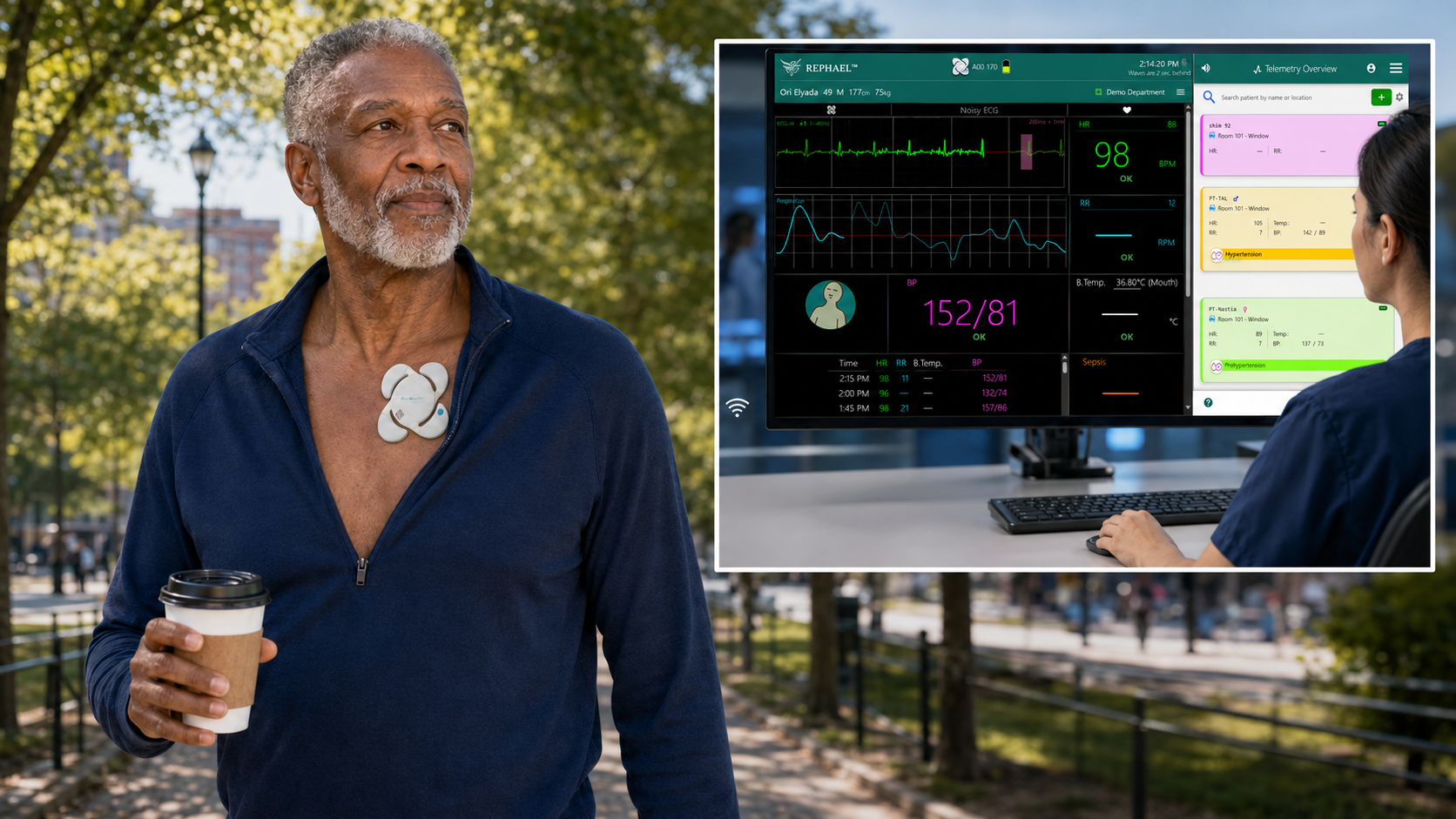
Community follow-up often brings together reports from the patient and measurements taken at different times. The team needs context to distinguish a meaningful trend from a single observation.
Within an appropriate clinical program, define who is monitored, for how long and who reviews the data. Verify PolyMonitor contact and the gateway connection, then interpret trends alongside activity, symptoms and planned follow-up.
One synchronized physiological view
Selected for the care pathway
Synchronized chest signals
BLE data relay
Signal processing and fusion
Review, assess, respond
The clinical team selects suitable patients under the applicable intended use. PolyMonitor is attached to the chest with ECG electrodes, following the device instructions. Staff check skin contact and signal quality.
The chest unit acquires ECG, respiratory and other physiological signals. It connects to a gateway over BLE; the gateway relays the data to the REPHAEL cloud for processing and fusion. Agree connectivity, coverage and responsibility for interruptions at each site.
The team reviews synchronized signals and trends in the clinical interface, alongside bedside assessment and the care plan. Assign a responsible team, review schedule and escalation pathway before starting.
Add physiological context to the patient’s reports and scheduled consultations.
Set a review schedule, communication channel and escalation responsibility for the community team.
Allocate reusable units to defined monitoring periods. Assess service utilization, return logistics and staff review time.
The intended benefits below describe the service design. Changes in outcomes, workload or cost require evaluation in the local care pathway.
Plan patient selection, connectivity and the clinical response with our team.